Biogas from a digester consists largely of methane, but it also contains CO₂, hydrogen sulphide (H₂S) and water. To inject the gas into the grid, it must meet strict specifications. Albatross supplies the complete upgrading plant that removes these components step by step and selectively – and turns what remains into a product instead of waste.
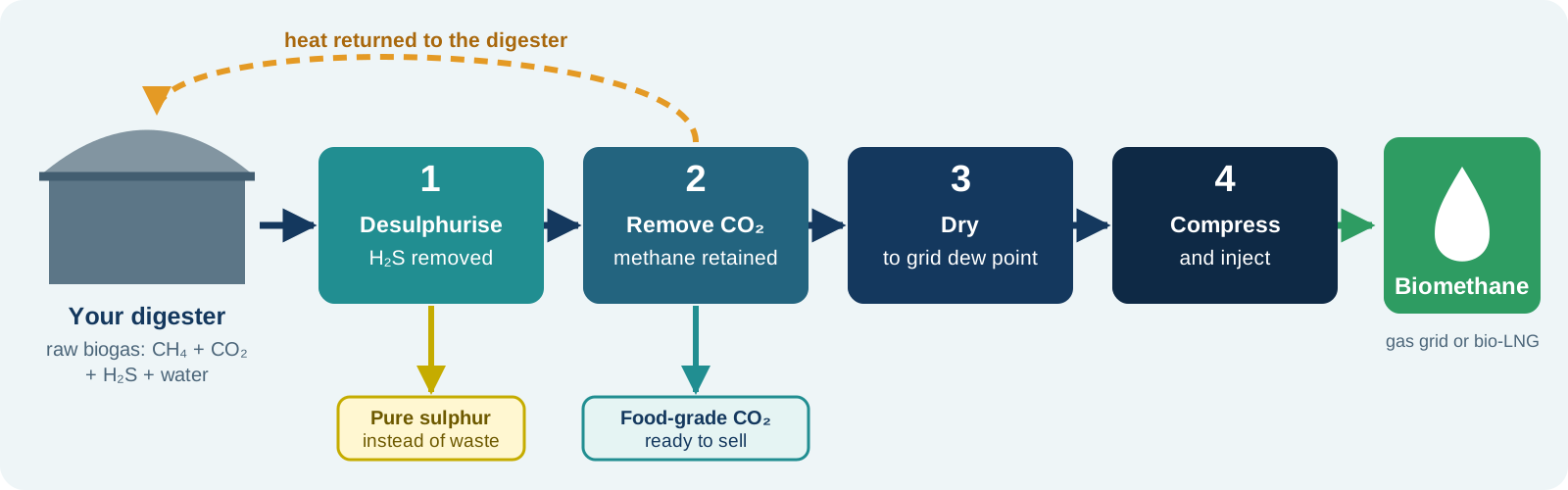
Your digester: raw biogas: CH₄ + CO₂ + H₂S + water
Desulphurise. H₂S removed
Remove CO₂. methane retained
Dry. to grid dew point
Compress. and inject
Pure sulphur: instead of waste
Food-grade CO₂: ready to sell
Biomethane: gas grid or bio-LNG
heat returned to the digester
Three questions from biogas producers
01 / AGRICULTURAL AND SMALL-SCALE DIGESTERS
“My digester is small – can I still produce biomethane?”
The challenge
With small gas flows, investment and operating costs weigh heavily. Many upgrading technologies only become viable at large scale, and drying often means a choice between high capital cost and high operating cost.
Our solution
A compact upgrading plant, built on skids and designed for small-scale use. The heat needed to remove CO₂ from the gas is returned in full to the digester, so the plant uses no net heat. We offer a maintenance contract that runs for the same period as the SDE++ subsidy.
The result
Biomethane at grid specification from around 55 Nm³ of raw biogas per hour, with a modest footprint and predictable costs over the full subsidy period.
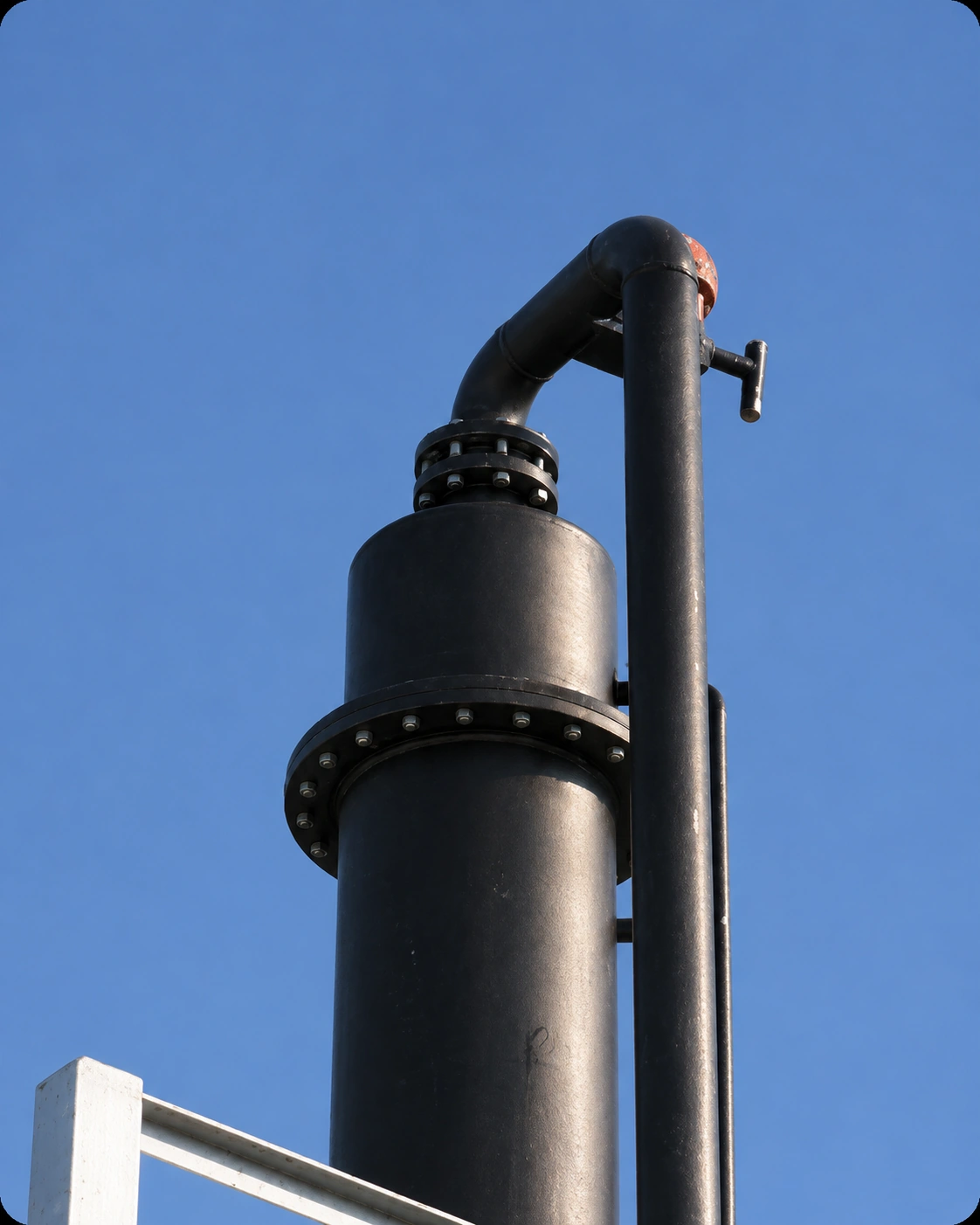
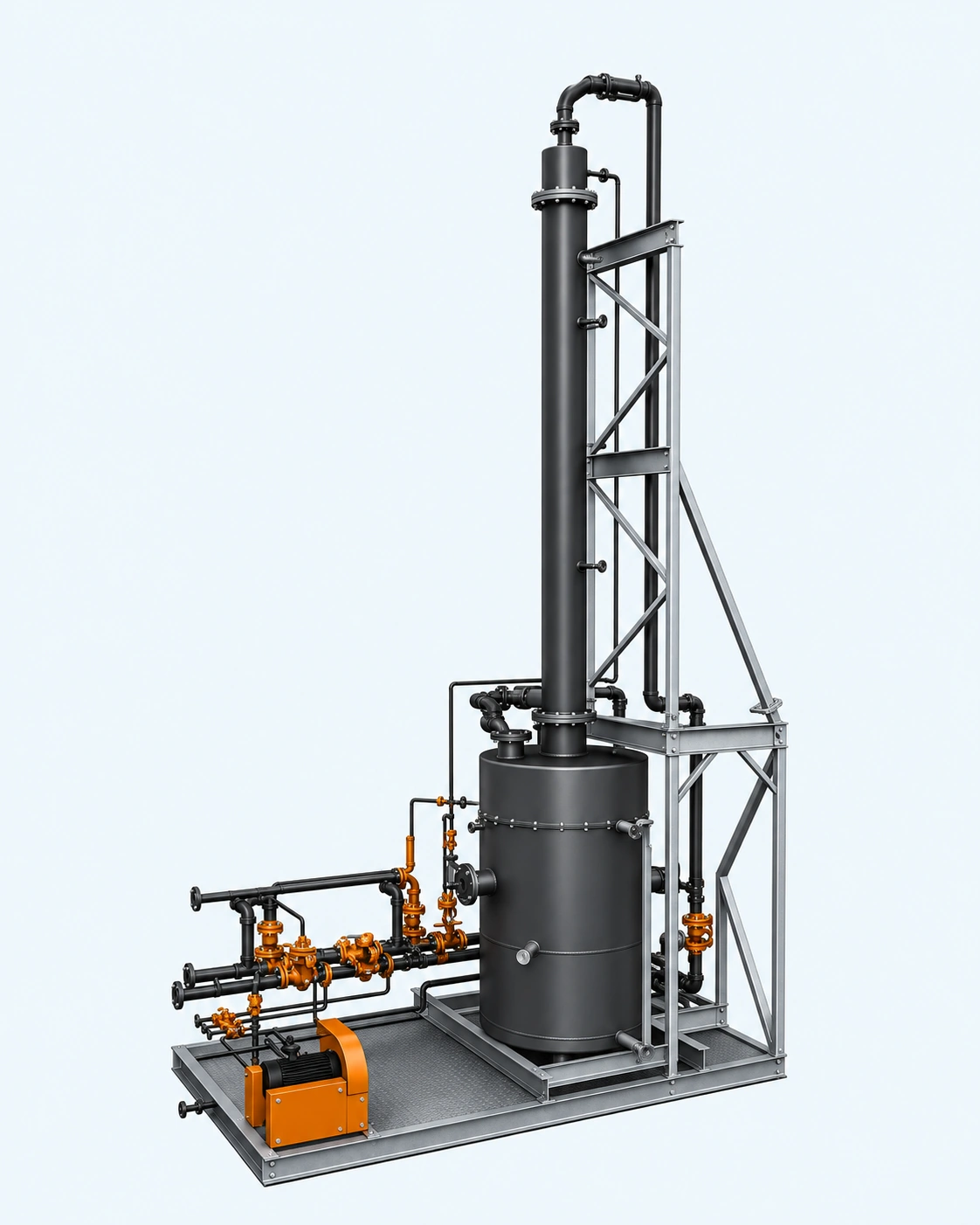
Left: Vitrisol® desulphurisation in operation at a biogas site. Right: design of a compact skid-mounted unit.
02 / DESULPHURISATION
“My biogas contains a lot of H2S – and I want to stop using activated carbon and iron salts”
The challenge
H₂S is toxic and corrosive, and the permitted concentration in the gas grid is very low. Conventional methods consume large amounts of chemicals, create a waste stream or also remove part of the CO₂, so an extra separation step is needed later.
Our solution
Our patented Vitrisol® process is 100% selective for H₂S and removes it in a single step to below 0.1 ppm, without taking methane or CO₂ with it. Depending on the amount of H₂S, it operates with periodic replacement of the liquid, with replenishment or with full regeneration. In the latter mode, pure crystalline sulphur is the only outgoing stream.
The result
Deeply desulphurised gas without spent carbon or sludge, and with virtually no methane loss. The technology can also be used on its own, for example upstream of an existing upgrading or CO₂ plant.
03 / MEDIUM-SIZED AND LARGE DIGESTERS
“I want to get more out of my biogas than just biomethane”
The challenge
With many upgrading technologies, methane escapes to the atmosphere and the separated CO₂ is simply vented. On top of that, demand is shifting: alongside grid injection, liquefied biogas (bio-LNG) is gaining ground.
Our solution
We remove the CO₂ with Bilisol®, our own solvent, which is non-toxic, biodegradable and has very low volatility. Methane loss stays at around 0.02%. Simply by changing the process settings – without modifying the plant – the same installation delivers biomethane with more than 98% methane or gas suitable for bio-LNG (less than 50 ppm CO₂). We can also remove terpenes and siloxanes.
The result
Biomethane or bio-LNG, plus food-grade biogenic CO₂ as an additional source of revenue – for plants of up to more than 2,000 Nm³ of biogas per hour.
Why Albatross for biogas
01
One supplier for the entire upgrading process.
Desulphurisation, CO₂ removal, drying, compression and grid injection in one integrated design, with our own technology for the core steps.
02
No waste, no consumable beds.
No activated carbon, membranes or air injection into the biogas. Sulphur and CO₂ are released as pure products.
03
A proven basis, cleverly developed further.
Our processes build on gas treating that has been used in the oil and gas industry for decades, and have been optimised specifically for biogas.
04
Designed around your gas.
Every design starts with a full analysis of your raw biogas, so the plant matches its composition and the requirements of your grid operator exactly.
Our way of working – from feasibility and design to construction and service – is the same as for our CO₂ solutions.
YOUR NEXT STEP
What could your digester deliver as biomethane?
Send us your biogas production and gas analysis. We will prepare an initial, no-obligation outline of the plant, output and costs.